
OEM ODM Android Tablet Customization Beyond Branding: The 2026 RFP Re-Scope
OEM ODM Android tablet customization used to mean one thing: your logo on the boot screen. In 2026 that bar is obsolete. Real customization now spans memory tiers, kiosk lock-down, 4G/5G dual-SIM connectivity, multilingual firmware, and driver-level BSP work — and the market evidence says buyers who keep scoping only branding will pay more for less fit. Here is how to re-scope your RFP around the customizations that actually move fleet outcomes.
Why ‘customization’ in 2026 means more than a boot logo
Buyers still treat customization as a cosmetic activity, but the 2026 OEM/ODM Android tablet market has moved the center of gravity. The profitable build decisions are now structural — memory-tier configuration, connectivity, firmware depth — not the case color. Industry trackers confirm the shift: Omdia’s tablet and notebook service describes full analysis of tablets, notebooks, industrial displays, and public displays, signaling that procurement professionals must separate screen-level commodity work from the OEM intelligence that shapes device fit ([1]). If your RFP template still asks only for branding, you are negotiating against a two-year-old market.
Teams comparing implementation options can also consult custom Android tablet factory.
OEM vs. ODM: What the manufacturing models change for you
The distinction is ownership of the design. Where OEM builds to your specifications, holding full control of hardware, branding, and intellectual property, ODM supplies a design the vendor refines and re-brands with its own names and logos — the “white label” model ([2]). That difference maps directly to customization depth: OEM partners generally carry your spec (higher engineering cost, clearer IP ownership), while ODM partners offer faster to-market on proven platforms with less unique control.
| Factor | OEM | ODM |
|---|---|---|
| Design ownership | Yours (spec-driven) | Supplier’s base design |
| Customization depth | Deep (firmware, memory, hardware) | Moderate (re-brand + selected config) |
| MOQ control | Higher investment per unit | Lower entry, proven platform |
| Best fit for | Differentiated fleets | Speed and value-segment runs |
What ‘purpose-built’ customization actually covers (beyond branding)
The manufacturable surface is broader than most RFPs assume. Because Android is open source, most OS firmware is modifiable — but every change adds risk, and non-GMS devices lose Google Play and Google location services ([5]). Consider this inventory: custom firmware and Android ODM tablet firmware branding (boot/splash animation, menus, auto-launch of custom launchers); kiosk lock-down mode, including browser lockdown to specific sites ([4]); GMS certification implications; ODM tablet memory configuration 2026 tiers (16GB/512GB–1TB); multilingual firmware; 4G/5G dual-SIM connectivity; an accessory ecosystem; and BSP/driver customization. Each choice trades stability and time-to-market for fit — none is free.
Memory tiers and the 2026 ecosystem shift: interpreting the signal
2026 procurement trends point the same direction: bigger memory, more connectivity, less commodity branding. The commercial listings evidence confirms it — 2026 arrivals include 16GB+1TB Android 15 octa-core gaming tablets with 4G call and 5G support alongside 4G LTE dual-SIM educational builds ([3]). As reported by that guide, over 60% of global tablet unit sales now fall under $500 and K–12 education will account for nearly 30% of total unit volume by 2028. What this suggests for buyers: memory-tier and connectivity options are no longer frills but deliberate signals of where white-label demand is consolidating, and the RFP that ignores them is already behind the market.
The decision framework: which customizations belong in your RFP
Not every advertised option belongs in every tender. Score each customization against fleet applicability, RFP inclusion, and over-engineering risk — start from the least customization that delivers your fleet’s value.
| Customization | Fleet applicability | RFP inclusion | Over-engineering risk |
|---|---|---|---|
| Firmware / boot branding | Widely useful | Always baseline | Low |
| Kiosk lock-down | High (POS, education) | Only if single-purpose | Medium if mis-scoped |
| Memory tier (16GB/1TB) | High for workflows | Confirm need, not hype | High for light use |
| Multilingual firmware | High (global fleets) | If multi-market | Low |
| 4G/5G dual-SIM | High for field | Confirm carrier | Medium |
| Accessory ecosystem | Medium | Stage after core | Medium |
| BSP / driver work | Niche | Rarely | High |
Worked run: an education fleet needs firmware branding, kiosk lock-down, and a mid memory tier — a 4G/5G dual-SIM and high-tier memory config are over-engineering that inflates cost and lead time. A field/mobile fleet, by contrast, justifies 4G/5G dual-SIM and a heavier memory tier, while firmware depth stays minimal.
Specs worth evaluating: a private-label shortlist
When you draft the white label Android tablet procurement, verify these on every SKU: GMS certification — never assume it applies to all models, confirm cert against exact SKU and destination market before release; SoC and performance against your workload; memory tier matched to app profile; display and durability for the physical environment; connectivity options (WiFi-only vs. 4G/5G dual-SIM); and after-sales and RMA terms. Choose a commercial Android tablet ODM supplier who documents configuration variability per model, since memory tiers and connectivity legitimately vary by SKU.
Putting it together: re-scoping your next RFP
The reusable rule is the one Hatch frames for any custom Android project: build the most value with the least amount of customization ([5]). Start from the lowest-cost proven design, add only the memory, connectivity, and firmware depth your fleet actually executes, and reject scope that serves a marketing slide rather than a deployment. For your next OEM ODM Android tablet customization RFP, paste the decision table above into the tender, attach a per-SKU GMS confirmation clause, and budget for a re-scope review quarterly — that review is where 2026 buyers recover the most value.
For product details and project planning, see custom tablet firmware and packaging.
Related guides
- Private Label Android Tablet Sourcing 2026: Verifying Android 14+, GMS and Enterprise Firmware Before MOQ
- OEM/ODM Android Tablet RFP Checklist 2026: Rugged, Edge-AI and PoE Readiness
- How the 2026 Q2 Memory Supply Decline Reshapes Tablet MOQ and Procurement Timelines
- Fully Rugged vs Semi Rugged Android: Engineering, TCO and the 2026 Memory Crunch
Planning an OEM tablet project?
Share the required screen size, performance, RAM/storage, firmware, branding, certifications, destination market and expected quantity so Wintouch can confirm a suitable configuration and project plan.
- Phone
- +8613922898904
- [email protected]
- +8613922898904
Content reviewed: 2026-08-31.
Evidence confidence
Confidence: Medium. This rating reflects cross-checking 5 sources across 5 independent domains. It measures evidence coverage, not certainty; verify safety-critical work against manufacturer instructions and local requirements.
References
APA 7th edition
- ↑Informa. (n.d.). Tablet Notebook and Industrial Display with OEM Intelligence. Retrieved August 31, 2026, from https://omdia.tech.informa.com/advance-your-business/displays/tablet-notebook-and-industrial-display-with-oem-intelligence-service.
- ↑5 Things You Should Know. (2016). Android OEMs vs. ODMs. https://nuumobile.com/android-oems-vs-odms-5-things-you-should-know/?srsltid=AfmBOop_-bP64omGVLZZs7d_RtLO46YVAVCZ2czcvs8DU7rtMU_gYX52.
- ↑Alibaba. (n.d.). How to Choose a Private Label Android Tablet: A Practical 2026 Guide. Retrieved August 31, 2026, from https://electronics.alibaba.com/buyingguides/private-label-android-tablet-guide-2026.
- ↑Geekland. (n.d.). Customizable OEM Android Tablets | Geekland: POE wall mount tablets and Industrial touchscreen panel PC OEM/ODM manufacturer. Retrieved August 31, 2026, from https://geekland.co/product-category/customizable-oem-android-tablets.
- ↑Cited 2 timesHatchmfg. (n.d.). Customization Options for Custom Made Android Tablets/Devices - Hatch: Custom Android Device Development and Manufacturing (Tablet, Phone, Firmware, Hardware). Retrieved August 31, 2026, from https://hatchmfg.com/customization-options-for-custom-made-android-tablets-devices.
You should also read:
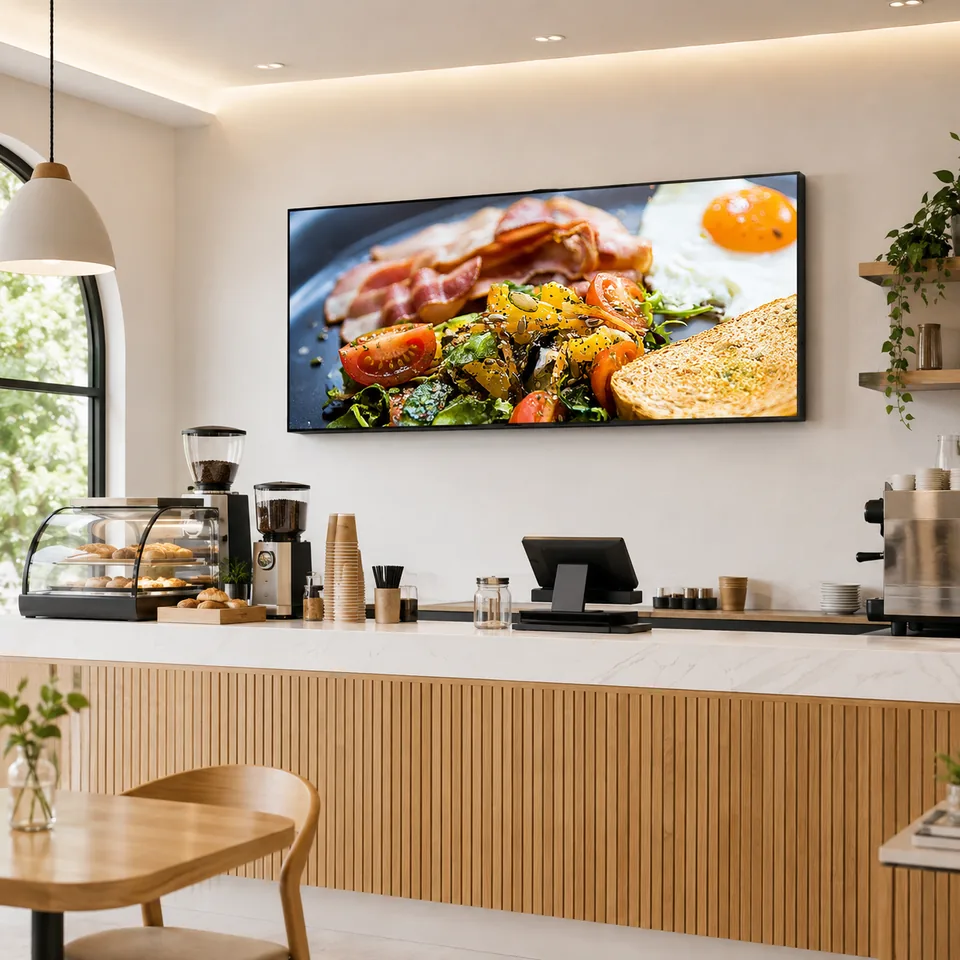
Digital Signage RFP Display Specifications: Matching 2026 Personalization to Wall-Mounted Screens and SoC
Introduction: Why Your 2026 Signage RFP Should Read Like an Engineering Document 4K is on track to become the majority resolution in digital signage, climbing from 44% to 55% of deployments through 2026 ([1]), yet most wall-mounted RFP templates still ask for little more than…
Continue reading...
How to Qualify an OEM/ODM Tablet Partner for Edge-AI Deployments
How To Qualify An Oem/Odm Tablet Partner is the decision framework examined in this guide. The sections below turn sourced evidence into practical comparison criteria without overstating what the available research can prove. Qualifying an OEM/ODM tablet partner for edge AI starts with a flat…
Continue reading...
AI self-service kiosk hardware requirements 2026: Which Display Specs Actually Change Under Personalization
Ai Self-Service Kiosk Hardware Requirements 2026 is the decision framework examined in this guide. The sections below turn sourced evidence into practical comparison criteria without overstating what the available research can prove. AI self-service kiosk hardware requirements in 2026 have moved past broadcast playout. By…
Continue reading...